 This is an unabashed announcement of my latest attempt at writing non-fiction. The University of Arizona Press is publishing this natural history book in November. But if you call them at 1-800-426-3797 or go to their website, www.uapress.arizona.edu, and use the code "FLR", you can get the book for 20% off. Such a deal!
Sunday, August 1, 2010
This is an unabashed announcement of my latest attempt at writing non-fiction. The University of Arizona Press is publishing this natural history book in November. But if you call them at 1-800-426-3797 or go to their website, www.uapress.arizona.edu, and use the code "FLR", you can get the book for 20% off. Such a deal!


Sunday, July 4, 2010
Celestial Sights


Shoot the moon and stars. It's a blast. Remember that the moon is lit by the sun so to record detail of the moon's surface generally requires a normal daylight exposure. Anything longer will yield a burned out white disk.
For stars, put your camera on a tripod, boost the ISO (try 800 or higher), open the lens to a large f-stop, and set the aperture on Bulb or time exposure. Also, turn off auto focus (all those tiny specks of light against black sky can drive the autofocus crazy), and set the distance to infinity. Try exposures in the 15 to 30 second range. Much longer and you will start to get star trails. In the photos above the cliffs show up well because of a nearly full moon shining on them.
Depending on your camera and photo software, you may be able to reduce digital noise for a sharper image. Have fun.
Wednesday, May 26, 2010
Colorado College Graduation


 May 17th found us in Colorado Springs attending Kate's college graduation. Hard to believe that the last four years have flown by so quickly. Their commencement speaker was Wade Davis, a reknowned National Geographic Society author and explorer. Also, our good friends, Bill, Maggie, Alice, and Aileen, were able to be there on this very special day. Now our "little girl" is off on new adventures including a two-week backpack in Alaska's Gates of the Arctic National Park.
As you can see, the weather was perfect for an outdoor ceremony and photography. The day before and day after were cloudy, cold, and rainy. My favorite "walk-around lens," Nikon's 18-200mm zoom, did a fine job capturing distant speakers, intimate moments, and action.
Shetland Islands


 It's been awhile since I have had a chance to write a blog. I was hoping to blog more from the National Geographic Explorer while sailing around the western Mediterranean and then up the west coast Great Britain. However, the internet connection on the ship was quite slow; therefore, rather expensive to upload pictures. Now that I am back in Flagstaff, I'll try to post more often.
Above are a few images from the Shetland Islands. The archaeological site is a broch called Mousa and dates from the Iron Age, about 2,000 years ago. The exact function of these mysterious structures is not known; although, they do appear defensive in nature. This 13 meter high broch is the best preserved of the 570 or so found around Scotland, mostly in the Hebrides, Orkneys, and Shetlands.
Brochs remind me of the Anasazi towers found in southeast Utah, which archaeologists first presumed were for defense, but now believe them to be celestial observatories. Something to ponder.
Tuesday, April 27, 2010
Corsica, France


 The west side of Corsica is a wild, rugged granitic landscape perfect for exploring by kayak, bicycle, or on foot. You can also drive, of course, but the narrow roads with terrifying drop-offs make for white-knuckle adventures.
Bonifacio is a walled city perched precariously on the edge of a high limestone cliff, where you can buy local sheep cheese, delicious olives, and a variety of wines. Corsica is also the birthplace of Napoleon Bonaparte. It's definitely an island to return to for a more leisurely visit.
Thursday, April 8, 2010
Menorca, Spain
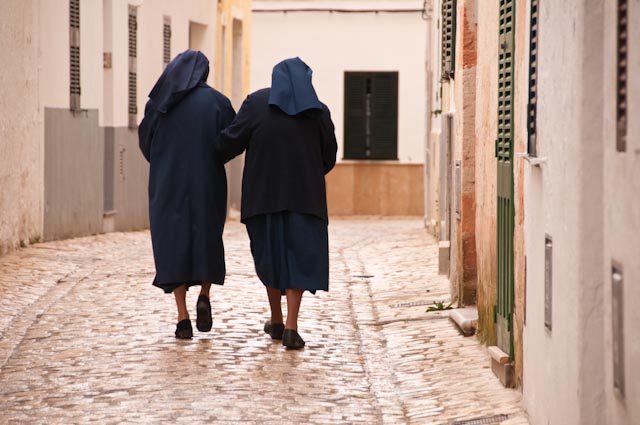


Today was a visit to Menorca, a tiny (minor) island owned by Spain. We got dropped off by Zodiac in the western coast town of Ciutadella. Skies were cloudy, the wind howling, and the temperature about 50 degrees, although clearing and warming were predicted. Unfortunately the weatherman blew it. The storm intensified as the day continued.
We managed a short photographic tour of the city before loading up on buses to head east, making stops at El Toro, highest (and no doubt windiest) on the island and at Poblat de Torralba, a prehistoric village and religious site several thousand years old. Then we continued to the east coast to Mahon, where an indigenous sauce has become spread (pun intended) worldwide as mayonnaise.
National Geographic photographer Massimo Bassano and I attempted another photo walk in the late afternoon; but after 45 minutes, we were all soaked to the bone so retreated to our ship. At Recap, we enjoyed white sangria, local gin, and tapas while learning that the tradition of serving alcohol and ham to visitors was to ferret out Moslems and Jews.
This soggy day was perfect for my little waterproof Olympus point & shoot.
Tuesday, April 6, 2010
Alhambra, Spain


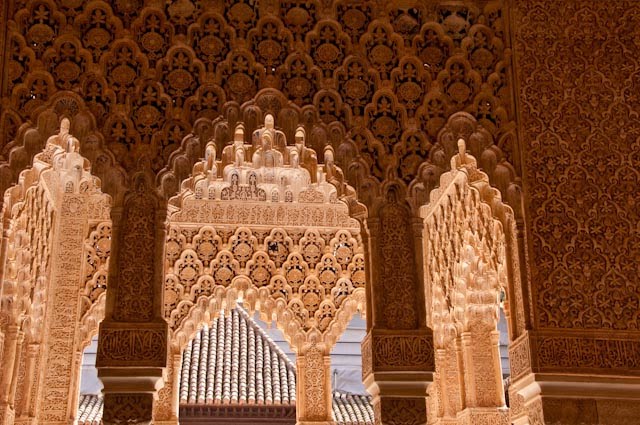

 After docking at Motril, Spain, we boarded buses for the scenic drive up to Granada (which means pomegranate, and our guide insisted each fruit always has 613 seeds) to the famous Moorish Alhambra palace and gardens. Although, the site was taken over by Catholic Spain in 1492, it still retains much of the original Islamic splendor.
 It's a very popular tourist destination plus we had to stay in groups, which made photography challenging. Plus the mid-day sun was not very exciting. It was scan a scene and shoot from the hip. Yet, it is still lovely place to visit.
Subscribe to:
Posts (Atom)

